
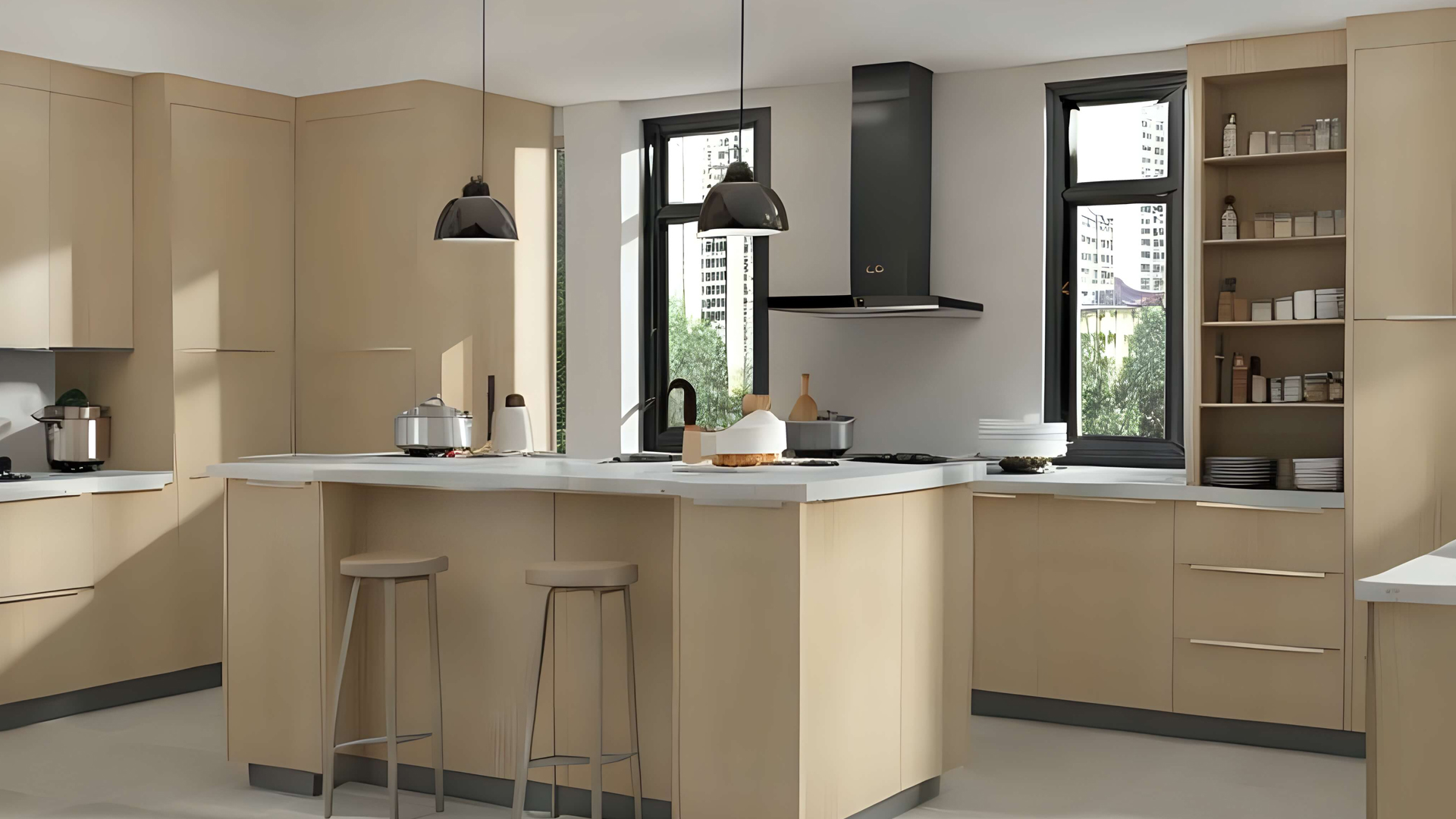
Elegant Crockery Storage Solutions
A crockery unit is a dedicated storage furniture piece designed to store, organize, and display crockery such as plates, bowls, cups, serving dishes, glassware, and cutlery. It is commonly placed in dining areas, kitchens, or open dining–living spaces and often doubles as a display and accent furniture element.
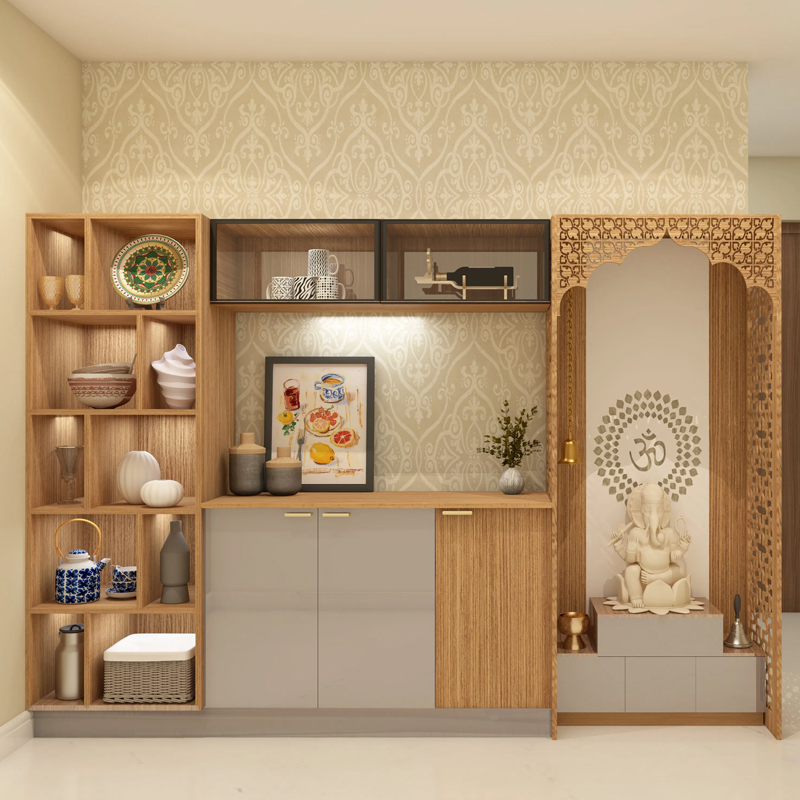
Wooden Crockery Unit
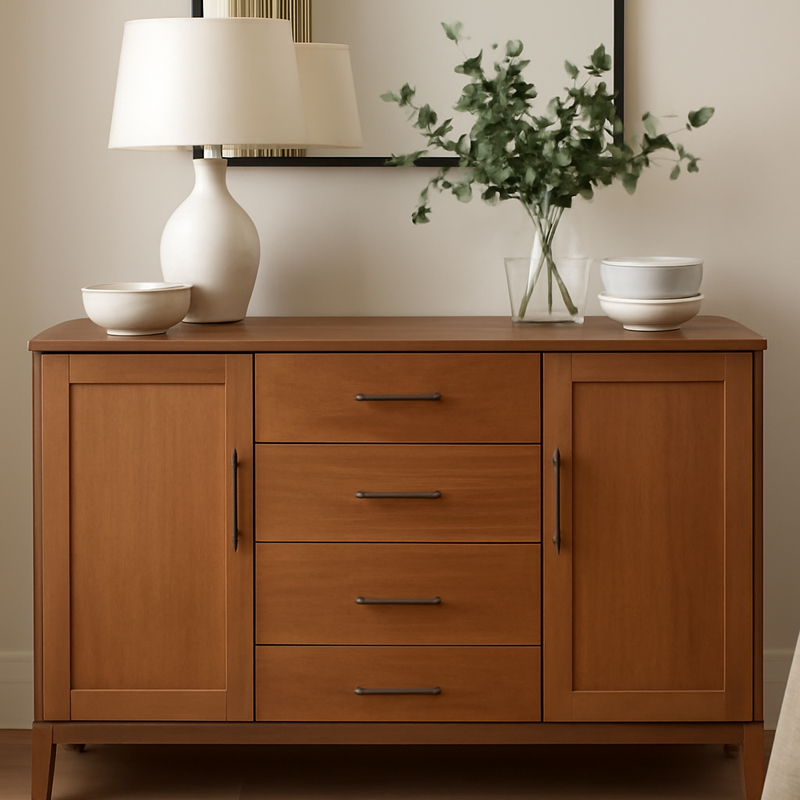
Simple Freestanding Crockery Unit

Plywood Crockery Unit

Crockery Unit with Bar Counter
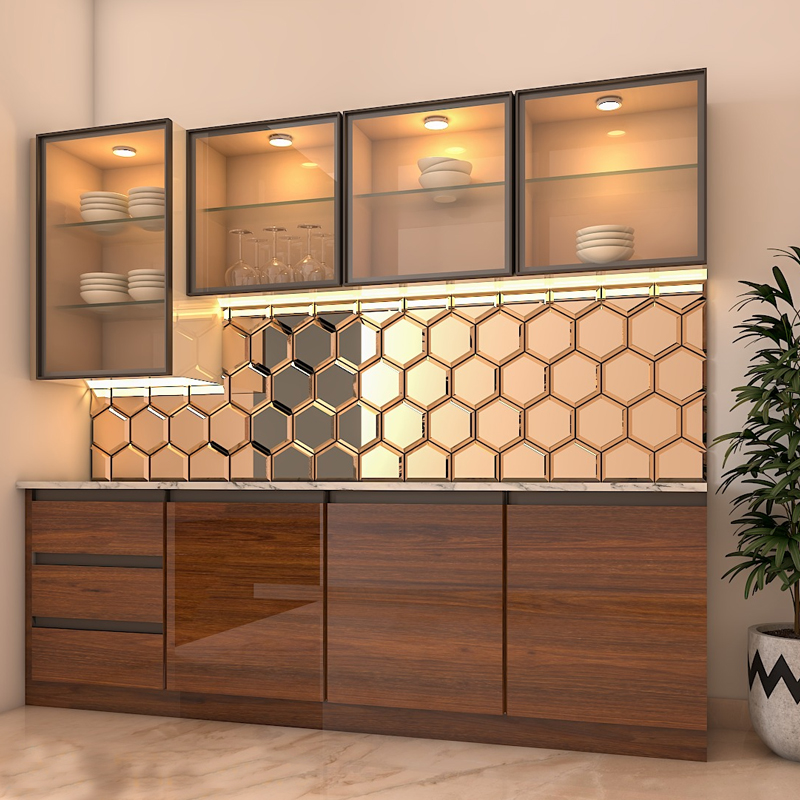
Wooden Glass Display Crockery Unit
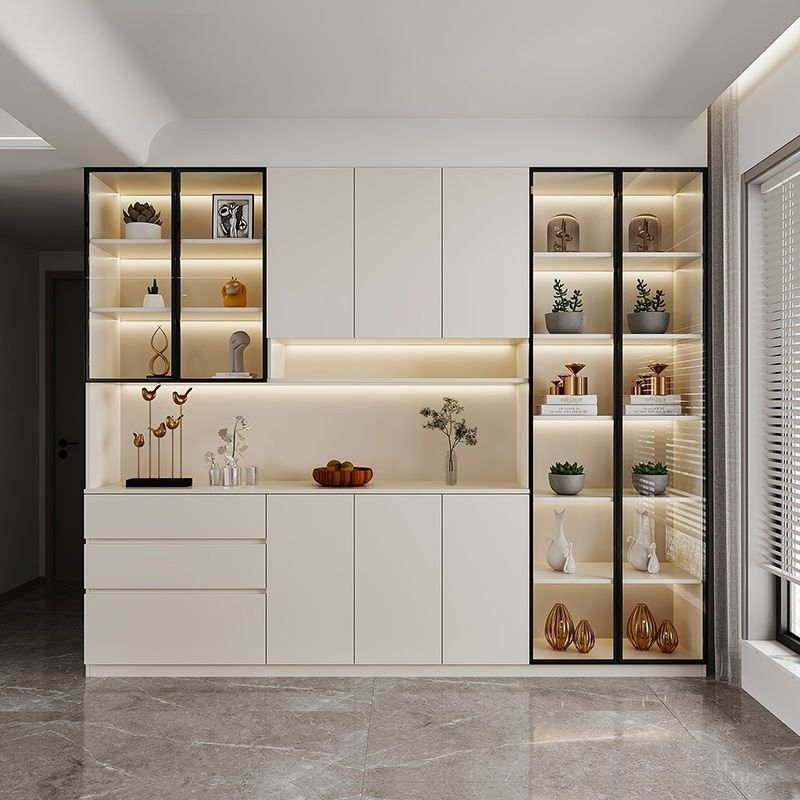
Wall-Mounted Crockery Unit
Essentials to Know Before Choosing a Crockery Unit
When selecting a crockery unit, consider the following essentials:
Space & Placement - Dining room, kitchen, or dining-living transition area | Wall-mounted, floor-standing, or built-in | Adequate clearance for doors and drawers
Storage Requirements - Quantity and type of crockery to be stored | Need for display vs. concealed storage | Shelving height for plates, bowls, and bottles
Functionality - Soft-close drawers and shutters | Adjustable shelves | Integrated lighting for display units
Aesthetic Compatibility - Match with dining table, chairs, and interior theme | Color, finish, and hardware coordination
Types of Crockery Units
Freestanding Crockery Unit
A standalone furniture piece that sits independently in a dining room or kitchen. It typically includes open shelves, cabinets, and drawers. Since it is not built into walls or other structures, it can be relocated as needed. Ideal for homes with spacious dining areas; people who want flexibility in arrangement.
Wall-Mounted Crockery Unit
A storage unit fixed directly onto the wall. It saves floor space and offers a sleek, streamlined look. These units often feature enclosed cabinets or open shelving. Ideal for compact spaces, apartments, and modern minimalist interiors.
Built-In Crockery Unit
Custom-designed and constructed as part of the wall or kitchen cabinetry. These are fitted to the exact dimensions of the room, providing a seamless and integrated appearance. Ideal for tailored interior schemes and homes where space optimization and cohesion are priorities.
Glass Display Crockery Unit
A unit with glass-fronted cabinets or shelves designed primarily for display. It allows decorative crockery, fine china, and glassware to be showcased while protecting them from dust. Ideal for luxury interiors and homeowners who want to highlight special crockery collections.
Crockery Unit with Bar Counter
A multifunctional unit that combines crockery storage with a small bar area — including spaces for bottles, wine glasses, and mixing essentials. Often includes open shelving, racks, and a countertop. Ideal for entertainers and modern households that integrate dining and social spaces.
Design Trends for Crockery Units in 2026
Minimalist & Handle-Less Designs - Clean, unobtrusive surfaces with push-to-open doors and concealed hardware for a streamlined, modern look.
Mixed Materials - Combination of wood, glass, metal, and stone to create visual depth and contrast.
Integrated Lighting - Built-in LED lighting to highlight crockery and improve visibility within shelves and display areas.
Earthy & Neutral Tones - Warm neutrals, muted greens, and organic hues that complement natural materials and soft interiors.
Slim & Vertical Profiles - Tall, narrow units that optimize storage while minimizing the footprint in compact spaces.
Smart Storage Systems - Adjustable shelves, modular sections, and multifunctional compartments for adaptability and organization.
Textured Finishes - Fluted wood panels, matte laminates, and tactile surfaces that add visual interest without ornamentation.
Main Components of a Crockery Unit
Carcass (Main Structure) - Internal framework
Shelves- Fixed or adjustable (wood or glass)
Shutters/Doors - Solid, glass, or mixed
Drawers - For cutlery and accessories
Hardware - Hinges, channels, handles, soft-close systems
Lighting - LED strips or spotlights
Back Panel - Decorative laminates, mirrors, or textured panels
Materials Used in Crockery Units
Plywood
Highly durable and moisture-resistant engineered wood used for the main structure (carcass). It provides long-term strength and is ideal for kitchens and dining areas.
HDHMR Board
High-density moisture-resistant board with superior screw-holding capacity. Commonly used where durability and moisture tolerance are required.
Particle Board
Cost-effective engineered wood used in budget crockery units. Suitable only for dry areas with minimal load.
Solid Wood
Natural hardwood such as teak, oak, or sheesham used for premium crockery units. Offers strength, longevity, and a classic aesthetic.
Laminate
Durable surface finish available in matte, gloss, and textured options. Scratch-resistant, easy to maintain, and economical.
Veneer
Thin slices of natural wood applied over plywood. Provides a rich, authentic wood appearance with a premium feel.
Acrylic Finish
High-gloss or matte synthetic finish that creates a sleek, contemporary look. Reflects light well and suits modern interiors.
PU Paint (Polyurethane Paint)
Seamless painted finish offering a smooth, luxurious appearance. Available in matte and gloss; requires skilled application.
Glass
Clear, frosted, tinted, or fluted toughened glass used for shutters and shelves. Enhances visibility and adds elegance.
Metal
Aluminium frames, stainless steel, or brass elements used for structural accents, handles, and shelving support. Adds a modern or industrial touch.
Stone & Solid Surfaces
Marble, quartz, or granite used mainly for countertops in bar-style crockery units. Adds durability and a premium finish.
Mirror Panels
Used at the back of display shelves to create depth and enhance lighting. Common in luxury display units.
Hardware & Accessories
Soft-close hinges, drawer channels, handles, and lighting systems that ensure smooth operation and longevity.
Get Expert Crockery Unit Design Consultation
Enhance your dining space with stylish crockery units featuring smart storage, elegant displays, and premium finishes. Contact SKM Home Interior to get customized crockery unit designs tailored to your home.
Request a Free Design Consultation